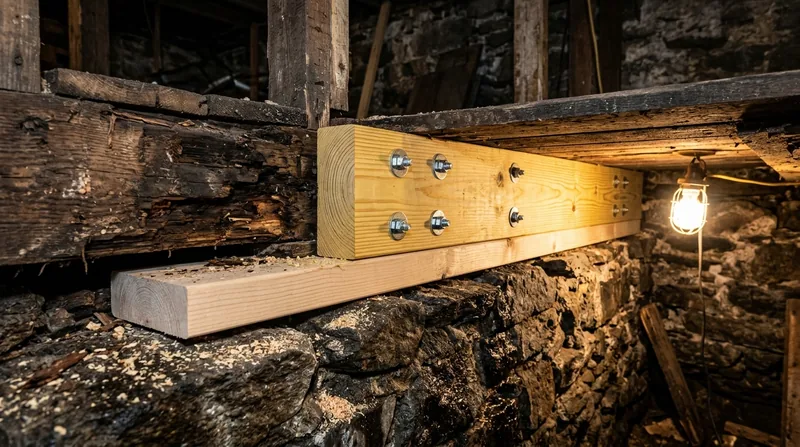




Floor joist and subfloor repair in Providence addresses one of the most common structural problems in the city's older housing stock. Providence's 18th- and early-19th-century Colonial and Federal homes, Greek Revival East Side properties, Victorian triple-deckers, and post-war capes all rest on wood sills set close to damp fieldstone or brick-rubble basements. The freeze-thaw cycle of long New England winters, heavy wet snow loading fascia and rim joists, and the coastal humidity off Narragansett Bay drive water into end grain and open every joint. Sagging, bouncy, or soft floors usually trace to joists that were notched decades ago for plumbing runs, sills rotted by capillary moisture from below-grade masonry, or insect damage at the bearing ends where joists sit on rim boards. We sister or replace compromised joists, rebuild subfloor sections, and level floors before finishes go back down, restoring both function and peace of mind. Call us at (401) 414-0963 for a free estimate, or read on to understand what causes these failures and how we repair them.
Why Floor Joist and Subfloor Failure Matters in Providence's Older Homes
Floor failures in Providence are not cosmetic. A sagging or soft floor signals that the structural members bearing the weight of your home and its contents have lost load capacity. This happens gradually, often invisibly, as moisture penetrates wood sills and the lower ends of joists where they rest on rim boards or ledgers. In Providence's triple-deckers, the problem multiplies: three stacked floors mean three sets of joists all competing for bearing space on narrow rim boards. Freeze-thaw cycles open gaps between rim and sill, water finds those openings, and rot advances from the outside in. Early intervention stops the decay and keeps repair costs down. Waiting until the floor feels spongy means more wood has to come out, more sistering or replacement is needed, and the job grows in scope and expense.
- Moisture from damp basements and ground contact causes wood rot at sill and joist bearing ends.
- Freeze-thaw cycles in Providence winters crack wood and open joints where water enters.
- Notched joists (cut long ago for plumbing or HVAC) reduce load capacity and invite localized rot.
- Termite damage or carpenter ant galleries weaken joists, especially in older sills and porch posts.
- Sagging subfloor and deflection can lead to cracked plaster, sticking doors, and uneven tile or flooring.
Addressing these issues early protects your home's structural integrity and prevents exponential cost growth as decay spreads.
Key info: In Providence's Federal Hill and Elmwood triple-deckers, we frequently find rot at the rim joist where it sits on the outer foundation wall. That narrow bearing point carries the load of three floors above it. Once wood there softens, the entire joist loses support, and the floor above can deflect inches. Catching and sistering that joist stops the problem before the floor sags into your living space.
For guidance on permit requirements for structural repairs in Providence, contact your local building department or review their city website for code and inspection protocols.
How We Repair Floor Joists and Subfloor in Providence
Our process starts with a detailed inspection to map the extent of rot, insect damage, or structural compromise. We probe soft spots with a awl, check bearing points and notched sections, and photograph findings so you understand exactly what's failed and why. Once we've identified which joists need sistering or replacement, we establish temporary support, remove or cut away damaged wood, install new lumber or sister new joists alongside compromised ones, and level the floor before subfloor and finishes go back down. In Providence's older homes, this often means working in confined basement spaces, navigating cast-iron plumbing, and matching existing joist dimensions and species where possible.
- We inspect and probe all bearing points, notches, and areas showing visible soft wood or staining.
- We install temporary support (posts and beams) to carry the floor load while we work below.
- We remove or cut away rotted wood, taking the damage back to sound material on all sides.
- We sister new joists alongside compromised ones or replace joists entirely where rot is too extensive.
- We level the floor using shims and sister placement, then reinstall subfloor and finishes.
- We document the work with photos and notes so you have a record of what was repaired and when.
This methodical approach ensures the floor regains full load capacity and stays level under normal use.
Local example: A 1920s Colonial Revival home in Elmhurst had a bouncy kitchen floor where two joists had been notched 30 years earlier to run plumbing to a half-bath. The notches removed 40 percent of the joist depth, and moisture from a slow sink drain had rotted the bottom 8 inches of both joists over decades. We sistered each joist with new Douglas fir stock, leveled the floor by 1.5 inches, and the homeowner reported the bounce was gone and the kitchen tiles no longer cracked.
Learn more about our framing and structural carpentry services for larger load-bearing projects.
Floor Joist and Subfloor Repair Methods
| Approach | Description | Best For |
|---|---|---|
| Sistering | New joist bolted alongside a compromised joist, sharing the load and restoring capacity without full removal. | Partial rot, notched joists, or deflection where the existing wood can still carry half the load during repair. |
| Full joist replacement | Removal of a joist entirely and installation of new lumber, typically necessary when rot or insect damage extends more than 30 percent of the joist length. | Extensive rot, termite galleries, or structural compromise that sistering alone cannot address. |
| Subfloor patching | Removal and replacement of rotted subfloor decking (typically 3/4-inch tongue-and-groove or plywood) over a localized area. | Rot in subfloor from above-grade water entry (roof leaks, ice dams) or localized moisture without joist damage. |
| Sill plate reinforcement | Installation of a new pressure-treated plate or sister plate at the rim joist bearing point, often combined with moisture management below grade. | Rot at rim joist or sill plate from capillary moisture in Providence's damp basements, protecting the critical bearing point. |
Floor Joist and Subfloor Repair Cost in Providence: What to Expect
Floor joist and subfloor repair in Providence typically starts at $1,800 for a single-joist sister or small subfloor patch in an accessible basement. That baseline covers the inspection, temporary support, removal of rotted wood, installation of one new or sistered joist, and leveling. The job grows in cost based on several concrete factors: the number of joists that need repair, the extent of rot or insect damage, basement accessibility and headroom (tight Colonial or Federal-era basements take longer), whether plumbing or other utilities must be rerouted, and the need for engineered load calculations if the repair involves removing or altering load-bearing members. A multi-joist repair or full subfloor replacement in a large section can easily reach $4,500 to $8,000 or more. Getting two or three estimates from local contractors gives you a realistic sense of the scope and lets you compare approach and cost.
Visit our full pricing page for detailed breakdowns by job type and scale, or call (401) 414-0963 for a free, no-obligation estimate. We respond within 24 hours and will walk you through what the repair involves and what it will cost.
Floor Joist and Subfloor Repair Near Me: What Providence Homeowners Should Know Before Hiring
Choosing the right contractor for structural carpentry work in Providence starts with verification of insurance and a clear understanding of scope. Ask any contractor whether they carry liability and workers compensation insurance, and request a certificate of insurance before work begins. Get written estimates from at least two contractors so you can compare method, timeline, and cost. Check references from recent Providence-area jobs, and ask specifically about floor-leveling work in older homes where basements are tight and bearing points are challenging. For repairs that involve sistering or replacing load-bearing joists, confirm whether the contractor recommends an engineered load calculation or structural engineer review. Permits are often required for structural work in Providence, so ask your contractor whether they pull permits or if you need to contact the city building department directly. Understand the timeline: a single-joist sister with subfloor patching typically takes one to three days, while a multi-joist or whole-floor repair may take a week or more depending on basement access and utility conflicts.
- Verify that the contractor carries full insurance and can provide a current certificate of liability coverage.
- Get written estimates from at least two local contractors describing the repair method and timeline in detail.
- Ask for references from Providence-area floor repair jobs completed in the past two years.
- Confirm whether the contractor will pull structural permits or if you need to contact the city building department yourself.
- Understand what temporary support will be used and how long the work will take to avoid surprises.
Taking time to vet your contractor ensures the job is done right and your floor regains full structural capacity.
Ready to get started? Contact us today for a free estimate. Call (401) 414-0963 or fill out our online form, and we'll schedule an inspection at your convenience.
Floor Joist & Subfloor Repair in Providence: Pricing Guide
| Service | Price | Details |
|---|---|---|
| Single joist sister or small subfloor patch | Starting at $1,800 | Inspection, temporary support, rotted wood removal, one new or sistered joist, and floor leveling in accessible basements |
| Multi-joist repair (2-4 joists) or moderate subfloor replacement | Starting at $3,500 | Multiple joists sistered or replaced, subfloor patching over larger area, leveling, and finish restoration in typical Providence basements |
| Extensive floor repair (5+ joists, full subfloor section, or sill plate work) | Starting at $6,500 | Large-scale joist replacement, significant subfloor work, sill plate reinforcement, utility rerouting, and complex basement access challenges |
| Structural engineering or load calculation (if required) | On estimate | Beam sizing and load-bearing alterations commonly require a licensed structural engineer and a permit; we can coordinate or you may hire independently |
| Travel and site inspection | Included | No separate charge for travel within Providence and surrounding service areas, and free estimate with response within 24 hours |
| Estimate | Free | No obligation to book; call (401) 414-0963 or submit your address online and we will schedule an inspection |
Indicative pricing, the exact cost depends on square footage, finish, and site access. Free personalized estimate within 24h at (401) 414-0963.


