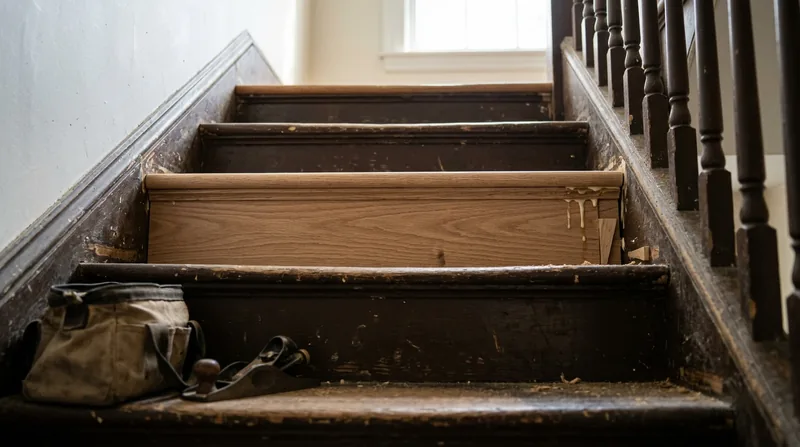




Providence's triple-deckers and hillside homes climb steep flights every day, and their staircases take the wear. Squeaky treads, loose balusters, worn stringers, and sagging railings are common in the city's 19th-century Federal Hill, Elmwood, and College Hill neighborhoods, where wood has settled and shifted for over a century. Stair and railing repair in Providence restores safety and function to these workhorse structures without always requiring full replacement. We repair and rebuild the treads, stringers, and railings that carry residents up and down, restore period details on Federal and Colonial Revival homes, and install sturdy handrails and attic ladders where they're needed. Whether your stairs are squeaking from movement in the frame, your railing is loose from wood shrinkage and nail pull-out, or your stringer is showing rot from moisture exposure, we diagnose the problem, explain what's driving it, and propose repair or replacement based on what the wood will hold.
Why Stair and Railing Repair Matters in Providence's Older Homes
Providence's residential stock is dominated by 18th- and 19th-century structures: Colonials and Federals on Benefit Street, Greek Revival and Italianate homes on the East Side, and the triple-deckers stacked three porches high in Federal Hill and Olneyville. These houses move. Seasonal freeze-thaw cycles push moisture into end grain, wood shrinks and swells with humidity, and gravity works on stair stringers that have carried generations of traffic. The damp coastal climate and proximity to the Providence and Seekonk rivers mean water wicks up into sill plates and can reach stair framing below grade or in basements. Loose railings and squeaking treads often signal wood movement rather than catastrophic failure, but left unaddressed they become safety hazards and accelerate decay.
- We identify the root cause of movement, squeaking, or looseness before proposing a fix.
- We repair stringers, treads, and risers in place when the wood is sound and the joint can be tightened.
- We replace individual components or entire stair runs when wood is soft, checked, or beyond tightening.
- We restore period railings and balusters on Federal, Colonial Revival, and Victorian homes to match original profiles.
- We install modern handrails and attic ladders where building codes or safety require them.
Getting stairs and railings right protects residents and preserves the value and character of Providence's historic neighborhoods.
Local example: A triple-decker in Federal Hill with 120-year-old stairs had treads that squeaked and a railing that shifted when you leaned on it. The stringers were sound, but nails had pulled loose from wood shrinkage and seasonal movement. We re-fastened the treads with screws, tightened the railing newel post, and shimmed loose balusters. The stairs are quiet and solid again, and the repair cost a fraction of replacement.
For more information on how wood ages and moves in Providence's climate, see our guide to wood rot and dry rot repair, which often accompanies stair problems in basements and lower floors.
How We Repair and Rebuild Stairs in Providence
Every stair job starts with a site visit and a clear diagnosis. We walk the stairs, test the stringers for soft spots, check the railing for movement, and look for signs of moisture, rot, or insect damage. We explain what we find and why it's happening, then propose repair or replacement based on what will last and what makes sense for the home's age and character. Our work is field-proven: we use the same methods and materials that have kept Providence's stairs sound for decades.
- We inspect stringers, treads, risers, and railings on site and test wood for soundness and movement.
- We tighten loose treads and risers by re-fastening with screws or lag bolts, shimming gaps, and coping joints where needed.
- We sister cracked or split stringers with new framing bolted to the sound wood, restoring strength without replacement.
- We replace individual treads or entire stair runs in Douglas fir, red oak, or redwood to match existing species and finish.
- We rebuild or restore railings, balusters, and newel posts to original profiles using hand tools and period joinery.
- We install modern handrails, attic ladders, and safety gates where codes or family needs require them.
The result is stairs that are safe, quiet, and built to last another century in Providence's homes.
Example from Elmwood: A Queen Anne Victorian with a grand staircase had balusters that were loose and a landing that sagged slightly. We tightened every baluster with shims and screws, re-fastened the railing to the newel post, and sistered the landing joist with a new beam bolted underneath. The staircase is now solid and matches the home's original character without visible modern repairs.
For structural work such as load-bearing wall removal or beam replacement that might affect stair framing, see our beam replacement and load-bearing wall removal service.
Stair Repair Methods and When to Use Them
| Approach | Description | Best for |
|---|---|---|
| Tightening and Shimming | Re-fastening loose treads and risers with screws, adding shims to close gaps, coping joints where wood has shrunk. | Squeaky treads, loose railings, minor movement from wood shrinkage and seasonal cycling. |
| Sistering Stringers | Bolting a new stringer or beam alongside a cracked or split stringer to restore strength and support the tread load. | Cracked or split stringers, sagging stairs, stringers with limited rot that can be reinforced rather than replaced. |
| Tread and Riser Replacement | Removing and replacing individual treads or risers while the stringers remain sound, matching species and finish. | Worn or split treads, soft or rotted risers, damaged finish, stairs that are otherwise structurally sound. |
| Full Stair Replacement | Removing and rebuilding an entire stair run, stringers, treads, risers, and railings in new wood or restored period materials. | Stringers that are heavily rotted or split, multiple treads or risers damaged, stairs that no longer meet code or safety standards. |
| Railing and Baluster Restoration | Tightening, repairing, or replacing balusters, newel posts, and handrails using hand tools and period-matched joinery. | Loose railings, missing or damaged balusters, worn newel posts, stairs in historic homes where character must be preserved. |
Stair and Railing Repair Cost in Providence: What to Expect
Stair repair costs vary based on the scope of work, the extent of damage, and whether repair or replacement is the honest answer. A simple tightening and shimming job on a squeaky staircase can start at around $600 to $900. Replacing individual treads or tightening railings typically runs $800 to $1,500. Sistering a stringer or replacing an entire stair run can range from $2,000 to $5,000 or more, depending on the number of flights, the wood species, and access. Restoration work on period railings and balusters in historic homes often requires more hand labor and custom joinery, which affects the final cost.
Several factors influence the final price. The size and complexity of the staircase, the condition of the wood, whether stringers need reinforcement or replacement, the availability of matching materials, and the proximity of the stairs to your home's main living areas all play a role. Access matters too: a basement staircase in a tight crawl space takes longer than an open interior stair. If your stairs require a permit (some municipalities require permits for stair alterations or railing work), that adds time and cost, and you should verify requirements with your local building department.
The best approach is to get a free, on-site estimate. We inspect the stairs, identify the problem, and give you a clear price range and timeline before you commit. Visit our pricing page for more detail on what different repair scopes include, or call (401) 414-0963 for a no-obligation estimate.
What to Look for When Hiring a Carpentry Contractor Near Me in Providence
Choosing the right contractor for stair and railing repair is about more than price. You want someone who understands Providence's older homes, knows how wood moves and ages in a coastal climate, and will explain the problem clearly before proposing a fix. A good contractor will listen to your concerns, walk you through the repair or replacement options, and stand behind the work with solid craftsmanship and attention to detail.
When you're comparing contractors, ask for references from recent stair or railing jobs. Check that they carry full insurance and can provide a certificate of coverage. Understand whether the job requires a permit and, if so, whether the contractor will handle the permit application or guide you through it. Many stair and railing repairs do not require permits, but alterations to load-bearing elements or changes to egress routes may, and it's worth asking your local building department to be sure. If your home is in a historic district or subject to HOA guidelines, confirm that the contractor understands those requirements and can work within them.
Get two or three estimates so you can compare scope, materials, timeline, and price. Be wary of contractors who rush through the site visit or offer a price without seeing the stairs in person. The cheapest estimate is not always the best value, especially on historic or complex work. Look for a contractor who takes time to explain what's wrong, why it happened, and what will fix it properly.
Ready to move forward? Contact us for a free estimate or call (401) 414-0963. We respond within 24 hours and never charge for an on-site consultation.
Stair & Railing Repair in Providence: Pricing Guide
| Service | Price | Details |
|---|---|---|
| Tightening and Shimming | Starting at $600 | Squeaky treads, loose railings, minor wood shrinkage; includes inspection, re-fastening, and shimming |
| Individual Tread or Riser Replacement | Starting at $800 | One or two treads or risers; includes removal, new wood in matching species, finishing, and installation |
| Stringer Sistering or Full Stair Run Replacement | Starting at $2,000 | Reinforcing or replacing stringers, multiple treads, railings; cost varies by number of flights, wood species, and access |
| Period Railing and Baluster Restoration | Starting at $1,200 | Hand-tool work, period-matched joinery, historic detail preservation; higher cost reflects custom labor and materials |
| Travel and Estimate | Included in Providence area | No separate mileage fee or call-out charge; free on-site inspection and estimate within 24 hours |
Indicative pricing, the exact cost depends on square footage, finish, and site access. Free personalized estimate within 24h at (401) 414-0963.


