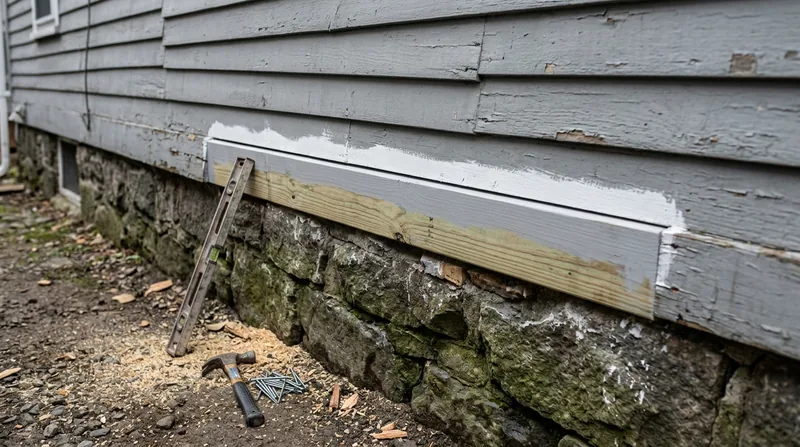




Wood Rot and Dry Rot Repair in Providence is the most common structural carpentry work we do. Providence's freeze-thaw winters, nor'easter rain, and damp bay air make decay inevitable on Colonial clapboard houses along Benefit Street, Victorian triple-deckers in Federal Hill and the Armory District, and Greek Revival homes on the East Side. Water pushes into end grain and open joints, ice dams soak fascia and soffits, salt air works on exposed trim, and wood sills set close to grade on damp fieldstone basements rot from below. We cut out decayed wood, treat surrounding lumber, and rebuild with rot-resistant material. This is a permanent repair, not a cosmetic patch.
Why Wood Rot and Dry Rot Repair Matters in Providence's Older Homes
Providence's building stock is old and vulnerable. The city's signature triple-deckers, built 1890 to 1920, have three porches stacked high, each one exposed to weather and freeze-thaw cycles. Colonial and Federal clapboard homes along College Hill and Fox Point sit on rubble basements with wood sills close to grade. Sill decay spreads into rim joists and band board, weakening the connection between foundation and frame. Exterior trim, fascia, and soffit take the brunt of nor'easters and salt air. Untreated rot spreads over years, and the cost to repair grows with it.
- Sill plate and rim joist decay undermines the structural connection between foundation and framing.
- Fascia and soffit rot allows water into wall cavities and accelerates damage to sheathing and studs.
- Window sill and exterior trim decay opens the wall to weather and invites carpenter ants and termites.
- Porch posts and stringer decay threatens the safety and stability of decks and stairs.
- Early repair stops the spread and costs far less than replacing structural members.
Catching rot early and replacing only the decayed wood is always the better choice than waiting for major structural failure. We work from your inspection, remove what is damaged, and rebuild with material that will not rot again.
Key info: Providence's damp bay air and freeze-thaw winters make sill and fascia rot the most common failure on homes in Cranston, Pawtucket, East Providence, and across the region. The Rhode Island Department of Environmental Management publishes guidance on moisture control in older homes; your own home inspector can identify specific decay and help you prioritize repairs.
How We Repair Wood Rot and Dry Rot in Providence Homes
Our process starts with a clear diagnosis. We probe suspect areas with a sharp tool, identify the extent of decay, and check surrounding wood for early softness. Rot spreads along the grain and into adjacent members, so we always cut back further than the visible damage to ensure we remove all compromised wood. We then treat the surrounding sound wood with a wood preservative, allow it to dry, and rebuild the damaged section with rot-resistant lumber, typically Douglas fir or treated material rated for the exposure. The repair is sealed and finished to match the surrounding work.
- We probe and measure the rot to determine how far back we must cut to reach sound wood.
- We remove all decayed material and treat the surrounding wood with a preservative rated for the exposure.
- We rebuild the damaged section with rot-resistant lumber, matching species and profile where visible.
- We seal all new wood and finish the repair to blend with the surrounding surface.
- For structural members like sill plates and floor joists, we sister new lumber alongside the existing frame or replace the member entirely if the decay is too extensive.
On a triple-decker in Federal Hill with rotted porch decking and stringers, we remove the decayed treads and stringer, sister new Douglas fir alongside the remaining sound frame, and rebuild the steps and railings. The repair restores safety and stops water from entering the wall. Learn more about our approach to deck and porch repair.
Example: A Colonial home on Benefit Street in Providence had rotted sill plate and band board where the rim joist met the fieldstone basement. We cut out the decayed sill, treated the existing rim joist, and rebuilt the sill with pressure-treated lumber set on a new sill sealer. The repair took three days and cost less than underpinning or replacing the entire foundation connection.
Wood Rot and Dry Rot Repair Methods and Approaches
| Approach | Description | Best for |
|---|---|---|
| Localized repair and rebuild | Cut out decayed section, treat surrounding wood, rebuild with rot-resistant lumber, match profile and finish. | Fascia, soffit, window sill, exterior trim, porch posts when rot is limited to one area. |
| Sistering | Bolt or screw new lumber alongside existing sound frame to reinforce or replace failed structural capacity without removing the old member. | Floor joists, rim joists, sill plates, and beam flanges where partial decay exists and the remaining wood is sound enough to carry load. |
| Full member replacement | Remove entire decayed structural member and install new material of the same species and size, or larger if code requires. | Sill plates, floor joists, porch stringers, and beams where decay is extensive and sistering is not structurally sound. |
| Preservative treatment | Apply wood preservative to sound wood adjacent to the repair area to slow future decay and protect the repair. | All repairs, especially in high-moisture areas like sill plates, basement rim joists, and exterior trim. |
The right approach depends on the location of the rot, how much wood is affected, and whether the member is structural or finish. We assess each job on site and recommend repair or replacement based on what the wood tells us.
Wood Rot and Dry Rot Repair Cost in Providence: What to Expect
The cost of wood rot repair depends on the size of the affected area, the type of wood involved, how difficult it is to access, and whether the repair is structural or finish work. A small fascia or soffit repair might run from $650 to $1,200. A rotted sill plate or floor joist repair involving sistering or partial replacement costs $1,500 to $3,500. Full structural member replacement or work on multiple areas runs higher and requires an on-site estimate.
Factors that affect your final cost include the species of wood (Douglas fir costs less than redwood or cedar), how far the decay has spread, whether the repair is hidden or visible (finish work takes longer), access (steep roofs or confined basements cost more), and whether a permit is required for the structural work. Getting two or three estimates from local carpenters is always smart. You will see real variation in price and approach, and that helps you make an informed decision.
We include all labor, materials, and cleanup in our estimate. Travel to Providence and surrounding areas is included with no separate mileage charge. The estimate is free and comes with no obligation to book. Call us at (401) 414-0963 or visit our contact page to request a free on-site estimate.
Wood Rot and Dry Rot Repair Near Me: What to Look for When Hiring a Carpenter in Providence
When you are looking for a carpenter to handle wood rot repair near you, start by checking that the contractor is fully insured and carries liability and workers compensation coverage. Ask for references from recent jobs in Providence or nearby towns like Cranston, Pawtucket, and East Providence. A good carpenter will walk you through the repair, explain what is decayed and why, and show you the sound wood that will remain. Get multiple estimates and compare not just price but the scope of work and the materials proposed. If the repair involves a structural member like a floor joist or sill plate, a permit from the local building department may be required, and the contractor should help you understand that requirement and coordinate with the city.
- Verify that the contractor is fully insured with current liability and workers compensation certificates.
- Ask for at least three references from recent repair work in Providence or the surrounding area.
- Request an on-site estimate that clearly identifies the scope of work and the materials to be used.
- Understand whether a building permit is required and who will handle the application and inspections.
- Confirm that the contractor will document the repair with photos and a written summary for your records and insurance.
A local carpenter who has worked on Providence's Colonial homes, triple-deckers, and Greek Revival houses understands the specific challenges of the city's climate and building stock. Call us at (401) 414-0963 or request a free estimate to discuss your repair and get a clear answer on cost, timeline, and next steps.
Wood Rot & Dry Rot Repair in Providence: Pricing Guide
| Service | Price | Details |
|---|---|---|
| Small fascia or soffit repair | Starting at $650 | Localized rot removal and rebuild up to 10 linear feet, material and labor included |
| Window sill or exterior trim repair | Starting at $850 | Decay removal, preservative treatment of surrounding wood, rebuild with rot-resistant lumber |
| Sill plate or floor joist repair | Starting at $1,500 | Sistering or partial replacement of structural member, preservative treatment, permit coordination if required |
| Full structural member replacement | On estimate | Removal and replacement of entire beam, joist, or sill plate requires on-site assessment and may need structural engineer |
| Travel | Included | No separate mileage or call-out fee for Providence and surrounding service areas |
| Free estimate | No obligation | On-site assessment and written estimate provided within 24 hours, response at (401) 414-0963 |
Indicative pricing, the exact cost depends on square footage, finish, and site access. Free personalized estimate within 24h at (401) 414-0963.


